Unlocking the Plant's "Fine-Tuning Switch"! Professor Aloysius Wong's Team at Wenzhou-Kean University's College of Science, Mathematics and Technology Discovers New Mechanisms for "Precision-Guided" Plant Stress Resistance
Plants cannot move. Faced with harsh environments such as high temperatures, severe cold, and drought, how do they sense danger, initiate defenses, and yet achieve "precise regulation without overreacting"? This is not only a fundamental scientific question in botany but also concerns the core of crop stress resistance breeding—solving this puzzle could provide a completely new technological path for food security.
Recently, the project "The role of adenylate cyclases in fine-tuning hormone signaling for plant stress tolerance and resilience," led by Professor Aloysius Wong, Dean of the College of Science, Mathematics and Technology and Researcher in the International Frontier Interdisciplinary Research Institute of Wenzhou-Kean University, received funding from the National Natural Science Foundation of China's Research Fund for International Excellent Scientists (RFIS-II). This research targets a particularly challenging aspect of plant stress resistance signal regulation. This marks Professor Aloysius Wong's third grant from the National Natural Science Foundation of China (NSFC), following his NSFC International (Regional) Cooperation and Exchange Project in 2018 and the NSFC Young Scientists Fund Project in 2021.
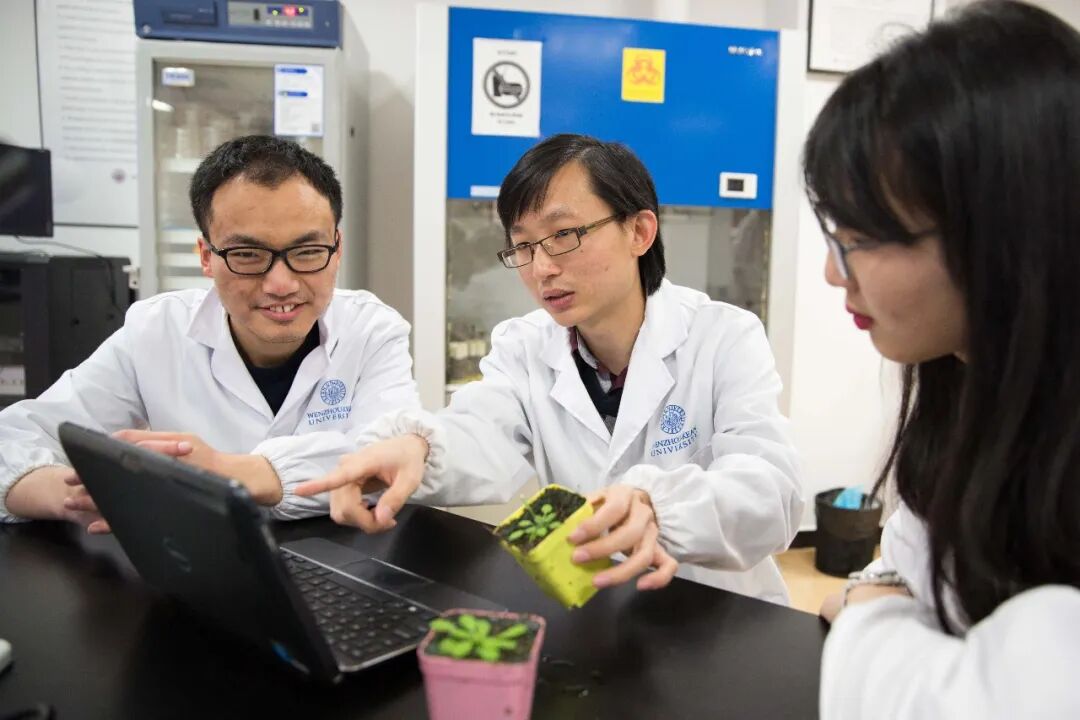
The Dilemma of Signaling: Plants release hormones as "alarm signals" to activate their defense mechanisms when faced with adversity. However, the problem lies in the fact that this signaling system must be sufficiently sensitive to respond to minute environmental changes, yet it cannot be overly sensitive, otherwise it will consume excessive energy and affect normal growth. Achieving this "precise regulation" has long been a recognized challenge in the scientific community.
Even more challenging is that the molecules and hormones that help plants sense external signals are highly conserved across different species, but due to the difficulty in identifying homologous sequences, the enzymes involved in the synthesis of these signaling molecules, as well as the proteins that interact with them, have long been difficult to locate. Traditional research methods are like "finding a needle in a haystack," resulting in slow progress.
Breaking the Bottleneck with "Precision-Guided" Research
Faced with this predicament, Professor Wong's team took a different approach, employing a unique "precision-guided" strategy—a research method based on computational modeling of short amino acid motifs—to identify novel protein catalytic centers and ligand binding sites. If traditional methods involve blindly searching through a vast number of proteins, this technology is like precisely inserting a "probe" into the core functional region of a protein, directly "targeting" the problem at the molecular level.
Based on the previous National Natural Science Foundation of China projects completed in 2021 and 2024, the team successfully discovered several novel adenylate cyclases (ACs) using this innovative method. These enzymes can use adenosine triphosphate (ATP) as a raw material to generate the crucial second messenger 3′,5′-cyclic adenosine monophosphate (cAMP)—a vital signaling molecule in plants that finely regulates the entire process of plant growth, development, and stress responses. The relevant findings have been published in authoritative international journals such as Molecular Plant and Nature Plants.
The Leap from "Discovery" to "Reversal"
Discovering adenylate cyclases was only the first step. A more crucial question is: how do these enzymes function within cells? How do they regulate hormone signaling and help plants resist adversity?
Existing research suggests that adenylate cyclases can act as "molecular tuners." In this newly approved National Natural Science Foundation of China (NSFC) project, Professor Wong will focus on investigating how adenylate cyclases regulate other domains on the same protein, integrating multiple signaling pathways to achieve hormone-mediated plant stress responses. Through computational analysis, the team discovered that these proteins carrying adenylate cyclases also possess potential binding sites for nitric oxide (NO) and abscisic acid (ABA).
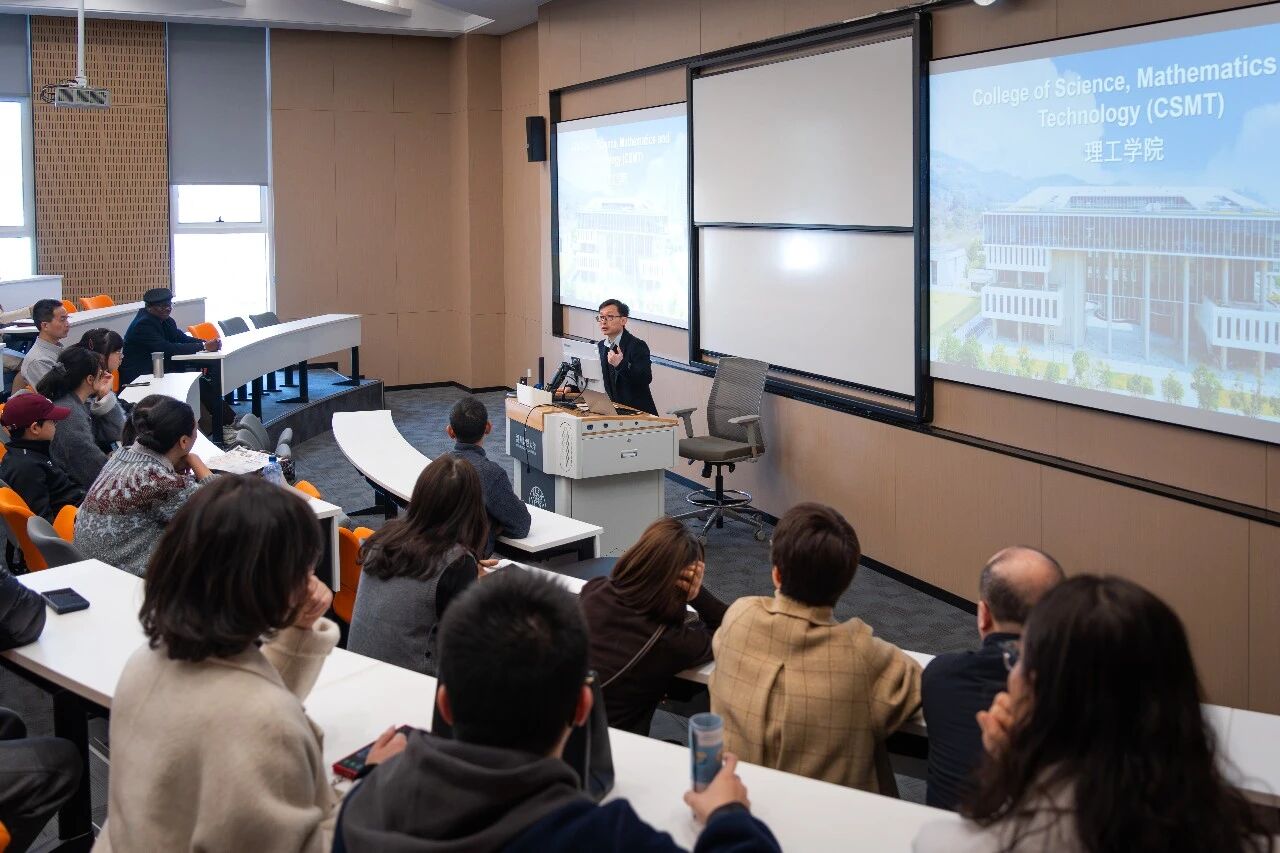
Based on this, Professor Wong proposes a scientific hypothesis: locally produced cAMP can regulate and alter the strength of hormone signals, generating precise and dynamic spatiotemporal effects in different functional regions of plant cells. This means that we have not only discovered where the "signal switch" is but also elucidated the mechanism of "how to fine-tune" it at the molecular level—analyzing the regulatory mechanism of adenylate cyclase on other protein domains and clarifying how multiple signals synergistically mediate plant hormone stress responses are key to deciphering new mechanisms of plant stress resistance and discovering new targets for crop improvement.
Giving crops "resilience" so they can grow strong enough. Professor Aloysius Wong holds a Master's degree in Biotechnology from the University of Cambridge and a PhD in Biological Sciences from King Abdullah University of Science and Technology (KAUST) in Saudi Arabia. He previously worked at the French National Centre for Scientific Research (CNRS) and achieved numerous important research results in the field of plant cell signaling. Since joining Wenzhou-Kean University in 2016, Professor Wong has led three National Natural Science Foundation of China (NSFC) projects and one Zhejiang Provincial Natural Science Foundation project. He has published numerous papers in top international academic journals such as Nature Plants, Molecular Plant, Plant Cell, Trends in Plant Science, Plant Journal, Journal of Experimental Botany, and Development. He has been selected for the Ouyue Elite Talent Program and received the title of Zhejiang Provincial High-Level Outstanding Talent.
From NSFC International (Regional) Cooperation and Exchange Projects to NSFC Young Scientists Fund Projects, and now to the NSFC Research Fund for International Excellent Scientists (RFIS-II).—Professor Wong's research journey is the culmination of years of accumulation and a vivid example of the mutual support between scholars and platforms.
"Wenzhou-Kean University's international research environment provides me with a valuable platform for conducting challenging and cutting-edge research," Professor Wong stated. He added that securing multiple national-level competitive research projects also demonstrates the continuously strengthening capabilities of Wenzhou-Kean University in supporting high-level scientific research and cultivating research talent. In his view, a combination of an international academic perspective, robust research support, and unwavering research ideals can foster high-quality research results.
“At Wenzhou-Kean University, young scholars are not just passing through. With a suitable research environment, strong support, and persistent academic pursuit, researchers can truly settle down here, grow alongside the university, and climb new academic heights step by step,” he said.
From basic research at the molecular level to the potential applications of crop resistance breeding, Professor Wong's team's exploration continues. Just as precision medicine opens new lifelines for late-stage cancer patients, deciphering the “fine-tuning switch” of plant stress resistance signals will bring new hope to global food security.